Indian Air Force
The air arm of India: it guards the sky and supports the Army and Navy from the air.
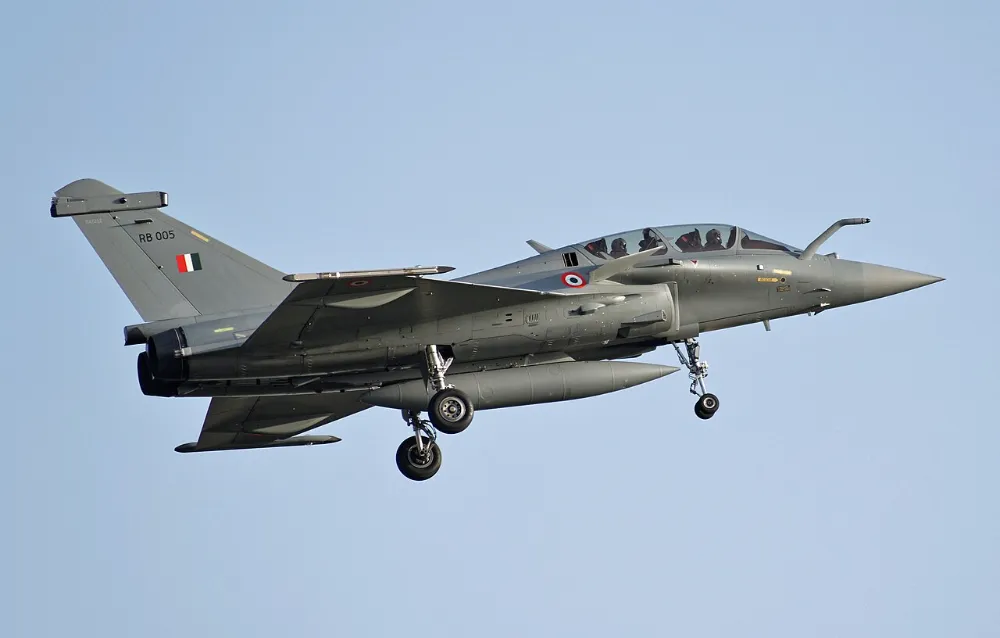
The Indian Air Force (IAF) protects Indian airspace, fights air battles, supports the Army and Navy from the air, carries troops and supplies, and helps in rescue and relief. The head of the Air Force is the Chief of the Air Staff, an Air Chief Marshal.
- Motto
- Nabhah Sprisham Deeptam (Touch the sky with glory (from the Bhagavad Gita, chapter 11))
- Air Force Day
- 8 October. The Indian Air Force was formed on 8 October 1932.
- Head of the service
- Chief of the Air Staff (CAS), an Air Chief Marshal
- Headquarters
- Air Headquarters (Vayu Bhawan), New Delhi
History in short
- 1932The Indian Air Force is established on 8 October as a branch of the British Royal Air Force in India.
- 1933The first flight, part of No. 1 Squadron, is formed in April with Westland Wapiti aircraft.
- 1945The title "Royal" is added to its name in recognition of its war service.
- 1950India becomes a republic and the word "Royal" is dropped.
- 1971The IAF plays a major part in the war with Pakistan. Flying Officer Nirmal Jit Singh Sekhon is awarded the Param Vir Chakra, the only IAF recipient.
- 1999Operation Safed Sagar: the IAF supports the Army in the Kargil War.
- 2019On 26 February the IAF strikes a terror camp at Balakot with Mirage 2000 aircraft.
Commands
- Western Air CommandHeadquarters at New Delhi. Looks after the western part of the country.
- Eastern Air CommandHeadquarters at Shillong. Looks after the east and north-east.
- Central Air CommandHeadquarters at Prayagraj (Allahabad).
- Southern Air CommandHeadquarters at Thiruvananthapuram.
- South Western Air CommandHeadquarters at Gandhinagar.
- Training CommandHeadquarters at Bengaluru. Trains pilots, engineers and other staff.
- Maintenance CommandHeadquarters at Nagpur. Repairs and supplies the aircraft and equipment.
Branches and parts
- Flying branchPilots and navigators who fly fighters, transport aircraft and helicopters.
- Technical branchEngineers who look after the aircraft (Aeronautical Engineering: Electronics and Mechanical).
- Ground Duty branchAdministration, Logistics, Accounts, Education and Meteorology.
- Garud Commando ForceThe special forces of the Air Force, who guard air bases and do special missions.
- AirmenTechnical and non-technical trades. Airmen now join through the Agniveervayu scheme.
Ranks and insignia
Insignia are described very simply here. Officers' stripes are worn on the shoulder or sleeve. Check the official Air Force website for the correct pictures.
Commissioned officers
| Rank (highest first) | Badge of rank |
|---|---|
| Marshal of the Air Force (ceremonial) | Five-star ceremonial rank; given once, to Arjan Singh in 2002 |
| Air Chief Marshal | National emblem with a wide stripe and three narrower stripes |
| Air Marshal | National emblem with a wide stripe and two narrower stripes |
| Air Vice Marshal | National emblem with a wide stripe and one narrower stripe |
| Air Commodore | A wide stripe |
| Group Captain | Four stripes |
| Wing Commander | Three stripes |
| Squadron Leader | Two narrow stripes with a thinner one between them |
| Flight Lieutenant | Two narrow stripes |
| Flying Officer | One narrow stripe |
Junior Warrant Officers and airmen
| Rank (highest first) | Badge of rank |
|---|---|
| Master Warrant Officer | Badge of rank worn on the sleeve or shoulder |
| Warrant Officer | Badge of rank worn on the sleeve or shoulder |
| Junior Warrant Officer | Badge of rank worn on the sleeve or shoulder |
| Sergeant | Three chevrons |
| Corporal | Two chevrons |
| Leading Aircraftman | Propeller badge |
| Aircraftman | No badge of rank |
Air Force aircraft and weapons
28 entries in 6 groups. Tap one to read more.
Fighters
Transport
Special mission
Missiles and air defence
Browse all of air force aircraft and weapons
How to join
- NDA (after Class 12)Through the UPSC NDA exam, then Air Force Academy training for the flying branch.
- CDS (graduates)Through the UPSC CDS exam, for the Air Force Academy, Dundigal.
- AFCAT (graduates and some Class 12 entries)The Air Force Common Admission Test, for the Flying, Technical and Ground Duty branches, followed by AFSB interview. The NCC Special Entry is also part of it.
- Airman entry (Agniveervayu)Airmen join under the Agnipath scheme, which began in 2022. Details are on the official site.
Rules, age limits and dates change. Always read the official notification:
On this website:
Latest Air Force news
Questions students ask
When is Air Force Day?
On 8 October, because the Indian Air Force was formed on 8 October 1932.
What is the motto of the Indian Air Force?
"Nabhah Sprisham Deeptam", which means "touch the sky with glory". It comes from the Bhagavad Gita.
How can I become a pilot in the Air Force?
Through the NDA exam, the CDS exam or AFCAT. All of them need the Air Force Selection Board tests, which include a computerised pilot aptitude test for flying. Read the exam pages and the official notification.
Are the airmen and the officers selected in the same way?
No. Officers join through NDA, CDS or AFCAT; airmen join through the Agniveervayu selection.