Indian Army
The land force of India: it defends the country on land and helps in disasters.
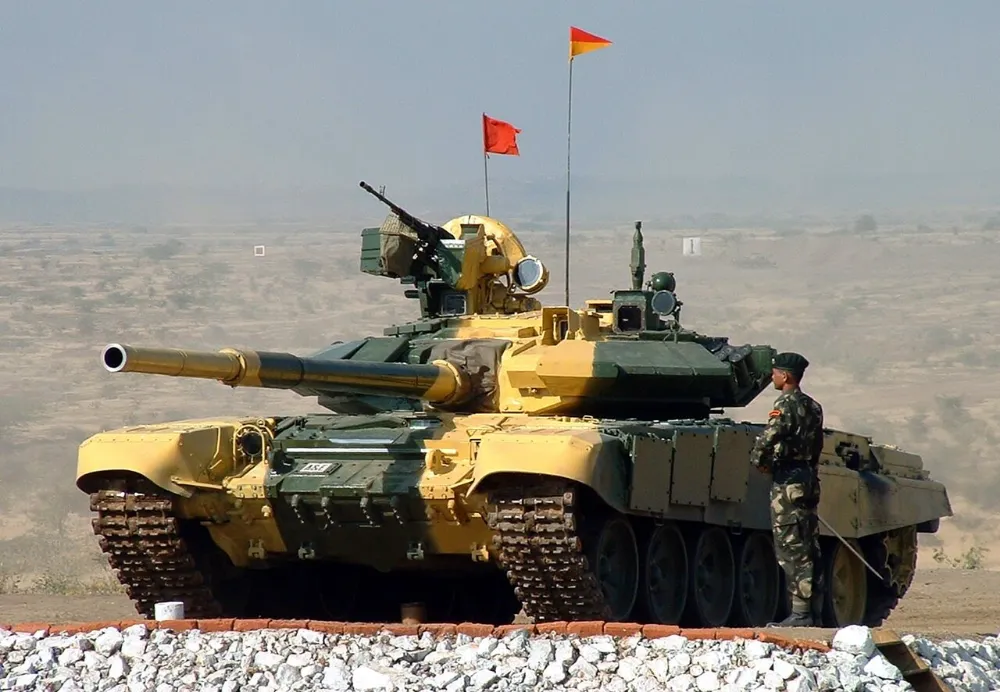
The Indian Army is the land part of the armed forces of India. Its soldiers guard the borders, fight wars on land, help the police and civil authorities when needed, and take part in rescue work after floods, earthquakes and other disasters. The head of the Army is the Chief of the Army Staff.
- Motto
- Seva Paramo Dharma (Service before self)
- Army Day
- 15 January. In 1949 General K. M. Cariappa became the first Indian Commander-in-Chief of the Army, taking over from the last British chief.
- Head of the service
- Chief of the Army Staff (COAS), a General
- Headquarters
- Army Headquarters, New Delhi
History in short
- 1947India becomes independent. The old British Indian Army is divided between India and Pakistan, and the Indian Army fights its first war in Jammu and Kashmir.
- 1949General K. M. Cariappa becomes the first Indian Commander-in-Chief (15 January, now celebrated as Army Day).
- 1962War with China in the Himalayas (October to November).
- 1965War with Pakistan.
- 1971War with Pakistan that ends with the surrender of the Pakistani forces in Dhaka on 16 December and the birth of Bangladesh.
- 1973General Sam Manekshaw is made Field Marshal, the first Indian Army officer given this ceremonial five-star rank. General K. M. Cariappa received it in 1986.
- 1984Operation Meghdoot: the Army takes control of the Siachen Glacier heights.
- 1999Kargil War (Operation Vijay): Indian troops recapture the heights taken by intruders. Kargil Vijay Diwas is on 26 July.
Commands
- Northern CommandCovers Jammu and Kashmir and Ladakh. Headquarters at Udhampur.
- Western CommandLooks after the western border area, including Punjab and Haryana. Headquarters at Chandimandir.
- South Western CommandCovers Rajasthan and Gujarat. Headquarters at Jaipur.
- Southern CommandCovers the south and parts of the west of the country. Headquarters at Pune.
- Central CommandThe central region, with a large reserve role. Headquarters at Lucknow.
- Eastern CommandCovers the north-east and the eastern borders. Headquarters at Kolkata (Fort William).
- Army Training Command (ARTRAC)Looks after the training and ideas (doctrine) of the Army. Headquarters at Shimla.
Branches and parts
- InfantryFoot soldiers who fight and hold ground. Organised in regiments such as the Punjab, Maratha Light Infantry, Rajput, Jat, Sikh, Dogra, Garhwal Rifles, Kumaon, Gorkha Rifles and Parachute Regiment.
- Mechanised InfantryInfantry that fights from armoured vehicles.
- Armoured CorpsTank units. They break through enemy lines and fight tank battles.
- Regiment of ArtilleryBig guns, rocket launchers and missiles that support the troops from a distance.
- Corps of Army Air DefenceProtects troops and places from enemy aircraft and missiles.
- Army Aviation CorpsHelicopters and light aircraft for observation, transport, rescue and attack support.
- Corps of EngineersBuilds bridges and roads, clears mines, and builds defences (the "sappers": Bengal, Madras and Bombay Sappers).
- Corps of SignalsRadio, telephone, satellite and data links between all units.
- Army Service Corps (ASC)Supplies food, fuel and transport to the troops.
- Army Ordnance Corps (AOC)Stores and supplies weapons, ammunition and equipment.
- Corps of Electronics and Mechanical Engineers (EME)Repairs and maintains the Army's vehicles, weapons and electronic equipment.
- Other servicesArmy Medical Corps, Military Nursing Service, Judge Advocate General branch, Army Education Corps, Intelligence Corps, Corps of Military Police and the Remount and Veterinary Corps.
Ranks and insignia
Insignia are described in words for awareness. The pictures and the latest details are on the official Army website.
Commissioned officers
| Rank (highest first) | Badge of rank |
|---|---|
| Field Marshal (ceremonial) | National emblem above a crossed baton and sword in a lotus wreath |
| General | National emblem and a star above a crossed sword and baton |
| Lieutenant General | National emblem above a crossed sword and baton |
| Major General | A star above a crossed sword and baton |
| Brigadier | National emblem and three stars |
| Colonel | National emblem and two stars |
| Lieutenant Colonel | National emblem and one star |
| Major | National emblem |
| Captain | Three stars |
| Lieutenant | Two stars |
Junior Commissioned Officers (JCOs)
| Rank (highest first) | Badge of rank |
|---|---|
| Subedar Major | National emblem on a red-and-yellow ribbon |
| Subedar | Two stars on a red-and-yellow ribbon |
| Naib Subedar | One star on a red-and-yellow ribbon |
Non-Commissioned Officers and soldiers
| Rank (highest first) | Badge of rank |
|---|---|
| Havildar | Three chevrons (V-stripes) |
| Naik | Two chevrons |
| Lance Naik | One chevron |
| Sepoy (and equivalent names in other arms) | No badge of rank |
Army equipment
24 entries in 7 groups. Tap one to read more.
Combat vehicles
Artillery
Aviation and drones
How to join
- NDA (after Class 12)Through the UPSC National Defence Academy exam, then training at the NDA, Khadakwasla, and the Indian Military Academy.
- CDS (graduates)Through the UPSC Combined Defence Services exam, then training at the Indian Military Academy, Dehradun, or the Officers Training Academy, Chennai.
- Technical Entry Scheme (after Class 12)A permanent-commission entry for students of Physics, Chemistry and Mathematics, selected by the SSB.
- Technical Graduate Course and Short Service CommissionEntries for engineering graduates and for other graduates, selected through the SSB (see the official site for the current rules).
- Soldier entry (Agniveer)Soldiers join through the Agnipath scheme, which began in 2022. Rally and exam details are on the official site.
Rules, age limits and dates change. Always read the official notification:
On this website:
Latest Army news
Questions students ask
Who is the head of the Indian Army?
The Chief of the Army Staff, a General. The name changes when a chief retires, so check the official website for the current chief.
When is Army Day celebrated?
On 15 January, in memory of the day in 1949 when General K. M. Cariappa took over as the first Indian Commander-in-Chief.
How can I become an Army officer after Class 12?
Through the NDA exam of the UPSC, or the Technical Entry Scheme. Both need the SSB interview. Read the exam page and the official notification for the rules.
Is the Assam Rifles part of the Army?
No. The Assam Rifles is a Central Armed Police Force under the Ministry of Home Affairs, but the Army has operational control of it.