Defence awareness
Missiles and the nuclear triad
Agni, Prithvi, BrahMos and how India can deliver nuclear weapons from land, air and sea.
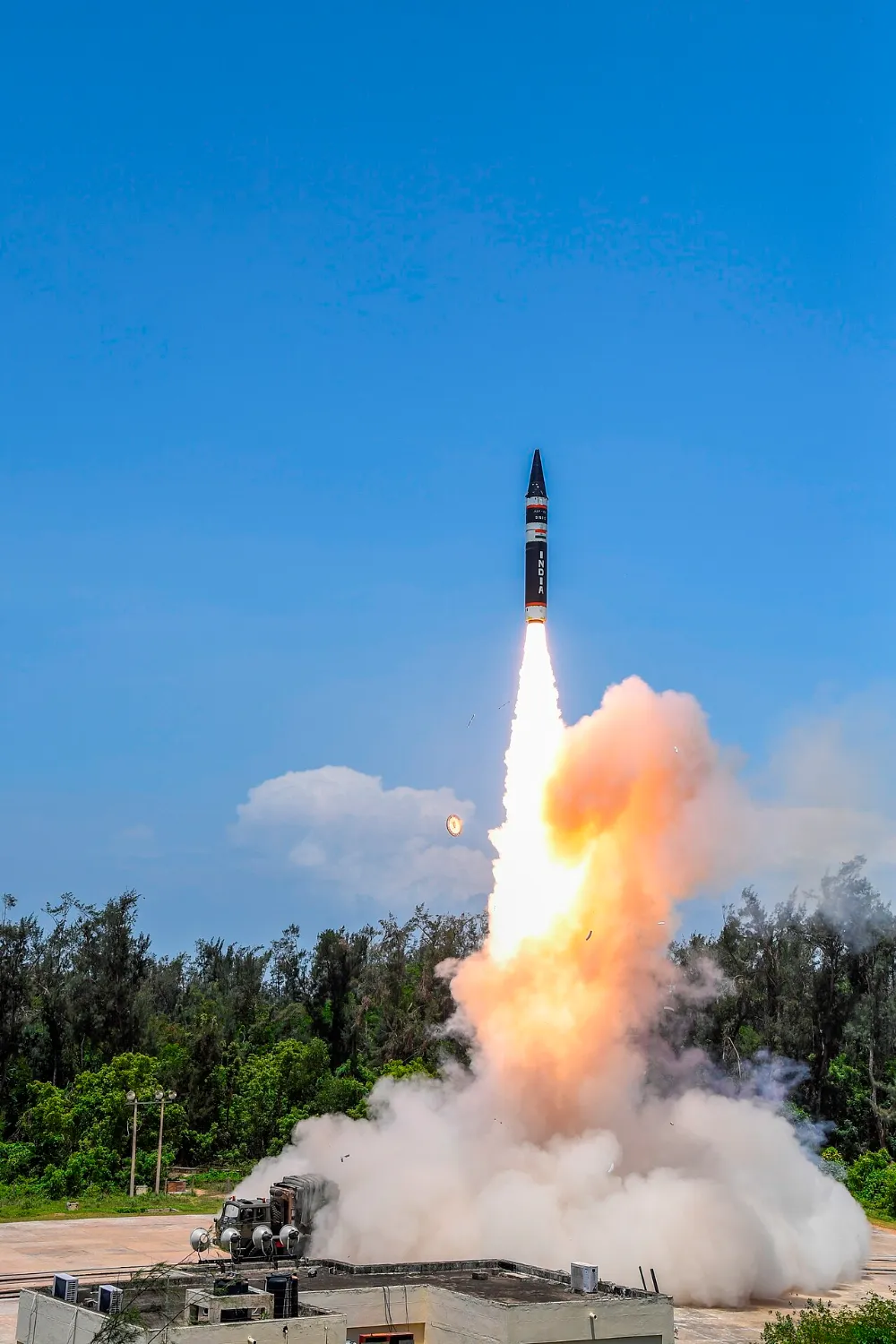
India has a policy of "No First Use" and "credible minimum deterrence". The "nuclear triad" means being able to deliver nuclear weapons from land, from the air and from the sea.
Technical details of nuclear forces are secret. Only well-known and widely published facts are given here.
- Pokhran testsIndia carried out a first nuclear test at Pokhran on 18 May 1974 and a series of tests in May 1998 (Operation Shakti).
- Land: Agni and PrithviBallistic missiles developed by DRDO. The Agni series covers medium to long ranges; Prithvi covers short ranges. Ranges differ between versions and are not listed here.
- AirSome fighter aircraft of the Air Force can carry nuclear weapons.
- Sea: Arihant classNuclear-powered submarines (SSBN) that carry ballistic missiles. INS Arihant was the first built in India.
- BrahMosA supersonic cruise missile that can be launched from land, ships, submarines and aircraft. It is made by an India-Russia joint venture.
- Nuclear Command AuthorityDecides on the use of nuclear weapons. It is headed by the Prime Minister.